Modern Religious Experience: Reflection #8 Islam: Two Perspectives: "Find where Islamic religious beliefs intersect with current events. Research a Western news source on the story and summarize the article fr..."
http://news.yahoo.com/s/afp/20101125/wl_mideast_afp/egyptreligioncoptsunrestarrest_20101125164240
Egypt's public prosecutor accused 156 protesters of planning to kill policemen and ordered their detention for two weeks. The protesters were Christians who were arrested on Wednesday November 24, over the refusal to grant them a permit to build a church. This led to a bloody riot between the Christians and police that cost one demonstrator his life and led to several wounded victims. The Christians who rioted with the police had been protesting against a government decision to stop them from building a church instead of a community center. They Christian minority complains of discrimination from the country's Muslim majority, and is the target of attacks.
http://english.aljazeera.net/news/middleeast/2010/11/20101125145719122133.html
Almost verbatim of the previous article.
The riots erupted after the police stopped the construction of the church, claiming the local Christian community had violated a building permit, while Christians claim the had permission to build.. Protesters threw stones and petrol bombs while police shot tear gas. According to the Christians, they are not given the same freedom to build places of worship as Muslims.
The two articles basically state the same thing. The only major difference being that the article form aljazeera.net claims that the Christian protesters threw bombs and stones at the police, while yahoo makes no mention of Christians retaliating with violence. This seems a little ironic that the Christian, church-building, group decided to throw bombs and stones at the police. So I am going take that bit with a grain of salt.
Sunday, December 5, 2010

Monday, November 29, 2010
Modern Religious Experience: Personal Commemoration- Reflection #7
Modern Religious Experience: Personal Commemoration- Reflection #7: "Think of an event in your life- past, present or future. You are going to create a commemorative ritual for this event. First, describe the ..."
The most significant event in my life so far is without a doubt the moment I learned of James Sprake’s passing. On July 12th, the day after my birthday, I decided to go for a jog. This was while I was visiting Michigan for the summer. I was about a half way into my run, when I got a phone call from my mother. This was one of those moments where you remember everything little thing about it: the exact spot where I was standing, the clothes I was wearing, the time of day, the weather, the girls cross country team that passed by. Stopping so I could answer my phone, I instantly noticed that my mom was crying. Prior to this, I had never seen or heard her cry. My stomach churned, for I knew what she was about to tell me was going to be awful. She went on to tell me of James’ accident, and how he had died. It took me about 45 seconds to process those words through my head. I crossed over to the end of the bridge, and laid down on the nearest bed of grass while my mind ran through memories of James. It was about two hours later that I broke down in tears, upon the realization that James is actually gone forever. On my way home, I was shuffling through my ipod, and noticed a playlist James made of all his music while we were in Bali together entitled, “James s**t ni**u!!”. This instantly brought a smile across my face, as I continued my way home listening to his music and thinking about him. Every July 12th, I will commemorate James by going for a run, and stopping and that spot where I received the call from my mom, while I listen to James’ music that he gave me and think about James’ life and all the joys he brought to me and hundreds of others.
Tuesday, November 9, 2010
Modern Religious Experience: The Morality of Greek Myths- Reflection #6

After undergoing a series of complicated events, the noble prince Bellerophon is sent to kill the monster, Chimera. Bellerophon prays to the goddess Minerva for help, who then sends down the winged horse Pegasus to help him with his task. With Pegasus at his aid, Bellerohphon is able to slay the beast, and is rewarded a home and a wife in the kingdom of Lycia. Greed got the better of Bellerophon, for one day, he rides up to Mount Olympus on Pegasus, claiming that he should be able to join the Gods. Once Jupiter saw this, he struck Bellerphon off his hourse and sent him craashing down to Earth, where he dies a homeless and crippled vagrant, while Pegasus rode on off onto the heavens.
The morals of the story are to remain humble,and to not be taken over by greed. The first moral is shown through Ballerphon's actions. He is constantly being put through very unfortunate circumstances, but he remains noble and humble throughout, and thus, he is rewarded with Pegasus. The latter moral is shown at the very end of the story. Bellerophon had everything he could ever want. He had a home in the kingdom of Lycia, was married to a beautiful princess, and had an awesome pet winged horse. But Bellerophon still saught after a seat in in Olympus, a request that cost him is life. This act by Jupiter was meant to help the people of Greece that they are merely human, and could not be compared to the Gods.
Thursday, October 21, 2010
Modern Religious Experience: Reflection #5: Bongwonsa Temple and Nature Walk
Modern Religious Experience: Reflection #5: Bongwonsa Temple and Nature Walk: "After visiting the Zen Buddhist Temple, Bongwonsa and attempting to see nature as a Taoist, answer this question: What is it about creation,..."
The world is a beautiful place full of amazing and breathtaking things. Nature is so vast and amazing, that it prompt us to ask ourselves questions, questions that cannot be answered by science or a quick Google search. Sure they can answer a lot of things, but can they answer questions such as “Who made me”, or “What happens when I die”. Or what about the Earth, or the universe? How did it all begin? These unknowns drive us crazy. We have to know the answer. This lack of understanding or fear of not knowing is the main reason why people seek religion. Religion gives all the answers to the questions asked above, and more. Taoists find answers through nature, Buddhists through meditating, and Christians through God. Each religion has a complex answer to a simple question. People search for these answers through religion and if they don’t find the right one, the search for another religion, till they find the right answer.
Saturday, October 2, 2010
Modern Religious Experience: Reflection #4: Buddhist Meditation
Modern Religious Experience: Reflection #4: Buddhist Meditation: "Spend 20 mintues in a silent meditation; a place you won't be disturbed, your own 'fig tree' as was Buddha's inspiration. In those 20 mintue..."
My meditation spot is outside on my trampoline. While I was out there meditating, I was able to empty my mind and achieve a “right mindfulness” for only about a moment before my mind quickly began to wonder onto other things, such as how tired i was, or how much work that I had to do this weekend or a song that was stuck in my head at that particular moment. I was also easily distracted by the noises around me. Upon much frustration, I moved inside to my bedroom to see if i could do any better in there. I lied on top of my bed, and realized I was able to concentrate much better although it wasn’t long before I dozed off into a deep sleep. So in conclusion, my meditation failed ( mostly because I was too exhausted to concentrate on emptying my thoughts) and I wasn’t able to seek any of life’s truths.
Thursday, September 16, 2010
Modern Religious Experience: Reflection #3- Gandhi: Hindu and Activist
Modern Religious Experience: Reflection #3- Gandhi: Hindu and Activist: "In class, your small groups went over movie questions about the content in Gandhi. You should know who each of the main characters are and t..."
Gandhi had said during the movie he was “…a Muslim and a Hindu and a Christian and a Jew and so are all of you”. Hindus are very open to other religions, in that they believe that they are all true in a sense. Gandhi showed this when he proclaimed that he and everyone else did not belong to a single religion. When doing this, he also expressed that he believed that everyone is equal. Another way Gandhi expressed his Hindu beliefs where the clothes that he chose to wear. Gandhi adopted the practice of weaving their own clothes from thread they themselves spun, to be accepted by India’s poorest people. This again shows that Gandhi believed himself to be equal to everyone and never thought of himself as better than others.
Gandhi once said “An eye for an eye ends up making the whole world blind.” This infamous quote perfectly shows how Gandhi felt about violence and revenge. He passionately fought for India’s independence from Britain with peace, words and nonviolent protests. And although Britain often harshly fought back, Gandhi never once retaliated with the same violence that was shown to them. In fact, whenever fighting would abrupt, Gandhi would begin fast, since he did not want death to be on his hands. Gandhi gave up the majority of his life for his cause and for his beliefs.
Modern Religious Experience: Reflection #3- Gandhi: Hindu and Activist
Modern Religious Experience: Reflection #3- Gandhi: Hindu and Activist: "In class, your small groups went over movie questions about the content in Gandhi. You should know who each of the main characters are and t..."
Modern Religious Experience: Reflection #3- Gandhi: Hindu and Activist
Modern Religious Experience: Reflection #3- Gandhi: Hindu and Activist: "In class, your small groups went over movie questions about the content in Gandhi. You should know who each of the main characters are and t..."
Modern Religious Experience: Reflection #3- Gandhi: Hindu and Activist
Modern Religious Experience: Reflection #3- Gandhi: Hindu and Activist: "In class, your small groups went over movie questions about the content in Gandhi. You should know who each of the main characters are and t..."
Thursday, September 2, 2010
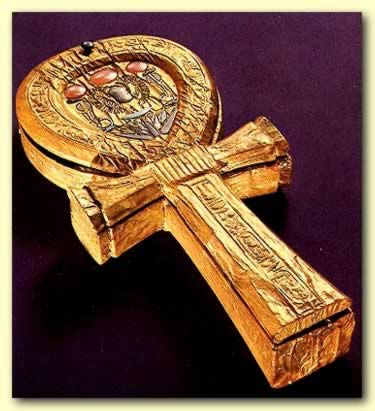
Sacred Poem
It has many names
the key of the nile, the symbol of life,
but most know it as simply
the Ankh
Gods where often seen with it
Carrying it by its loop
Or bearing one in each hand
Arms crossed over their chest
Life, death, gender, balance
Zest, joy, energy and fertility.
No one knows what its purpose is exactly
But we can agree it was important to everybody
the key of the nile, the symbol of life,
but most know it as simply
the Ankh
Gods where often seen with it
Carrying it by its loop
Or bearing one in each hand
Arms crossed over their chest
Life, death, gender, balance
Zest, joy, energy and fertility.
No one knows what its purpose is exactly
But we can agree it was important to everybody
Wednesday, August 25, 2010
Modern Religious Experience: Reflection Question #1
Modern Religious Experience: Reflection Question #1: "According to Mircea Eliade religion has 'not vanished without a trace; [it] has contributed toward making us what we are today and so, after..."
My dad comes from a family of very devout catholics. Since my mom does not practice her religion very often, if at all, my parents have raised me as a Catholic. They have put me in small Catholic Schools for all of elementary, middle, and almost high school, where we went to mass every friday morning, reconciliation once a month, and took religion classes everyday. I have been baptised, gone through first communion, and been confirmed.
Despite all of this, I still dont see myself as a true catholic. I never practice my religion anymore, except for the few times a year my dad takes me to church. Althoug I dont, see myself as a true catholic, I still abide by the same morals that I learned in my 8 years at a Catholic School.
My dad comes from a family of very devout catholics. Since my mom does not practice her religion very often, if at all, my parents have raised me as a Catholic. They have put me in small Catholic Schools for all of elementary, middle, and almost high school, where we went to mass every friday morning, reconciliation once a month, and took religion classes everyday. I have been baptised, gone through first communion, and been confirmed.
Despite all of this, I still dont see myself as a true catholic. I never practice my religion anymore, except for the few times a year my dad takes me to church. Althoug I dont, see myself as a true catholic, I still abide by the same morals that I learned in my 8 years at a Catholic School.
Subscribe to:
Posts (Atom)